Internal systems · Mains networks · Tanks

Pipework disinfection
drinking water systems and water mains

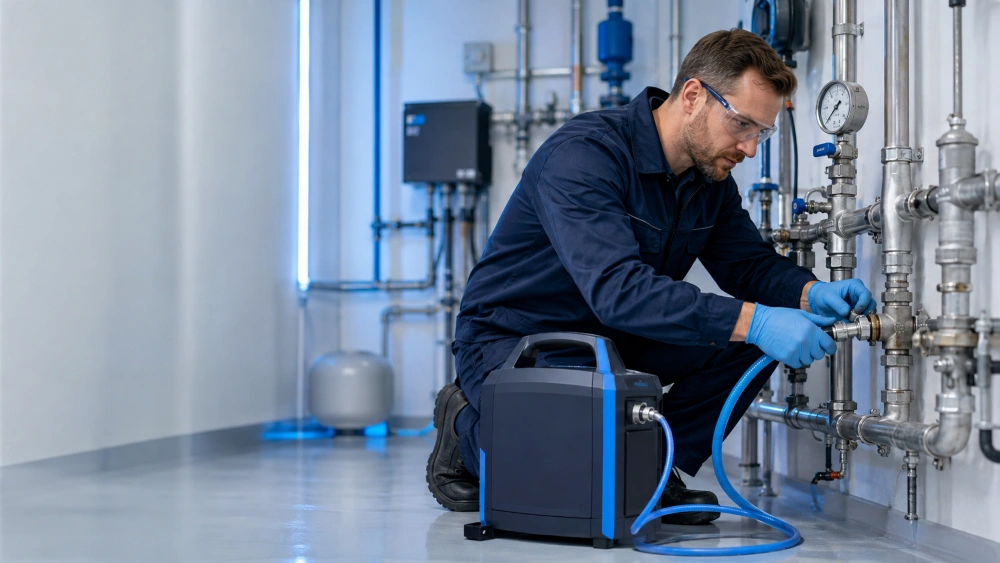
Complete disinfection of drinking water systems, cold and hot, of water mains and storage tanks. Chemical, thermal or combined, with full sanitary documentation meeting PSSE and PSP requirements.

24hlaboratory test results
100%documentation for the sanitary inspectorate
3 methodsthermal, ClO₂, chlorination
od 2009years of industry experience
When we act

When does a system need
disinfection?

Hot and cold water systems are an environment where biofilm, Legionella and other microorganisms thrive. Dead legs, stagnant water, an inadequate hot water temperature or ageing pipework are all risk factors that call for action.

The Ministry of Health regulation and sanitary inspectorate guidance impose an obligation to disinfect regularly on public buildings, hospitals, hotels, swimming pools and workplaces.

  • A water test result outside the limits
  • A system after refurbishment, alteration or a longer period out of use
  • Commissioning a new building or system
  • A scheduled sanitary inspection for the sanitary inspectorate or Sanepid
  • A mains failure or flooding of the premises
  • Seasonal opening of a property (hotel, resort, swimming pool)
Drinking water system disinfection
Scope

What does system disinfection cover?

Step 1

Inspection and risk assessment

Inspection of the system, a survey of draw-off points, identification of dead legs and stagnation zones. Assessment of hot and cold water temperatures.

  • System schematic and risk map
  • Hot water temperature measured on every riser
  • Identification of dead legs
  • Assessment of the condition of the fittings
  • Recommendation of a disinfection method
Step 2

The disinfection itself

Disinfection using the chosen method (thermal, ClO₂, shock chlorination or a combination). Full exposure of every draw-off point.

  • Disinfection of every draw-off point
  • Parameters monitored in real time
  • Exposure of dead legs and capped ends
  • Disinfection of tanks and pressure vessels
  • Safe discharge of post-disinfection water
Step 3

Testing and documentation

Water sampling before and after disinfection. Analysis at the accredited GBA Polska laboratory. Full documentation for Sanepid.

  • Sampling by a certified technician
  • Analysis by GBA Polska — a PCA-accredited laboratory
  • Results within 24–48 hours
  • Disinfection report and analysis
  • Archived documentation for the sanitary inspectorate and fire service
Who it is for

Which properties do we serve?

Hotels and guesthouses

Mandatory disinfection of hot and cold water — Legionella, the sanitary inspectorate and regular reports.

Hospitals and clinics

A critical environment — full documentation and a Legionella risk management plan.

Apartment blocks

Disinfection of hot and cold water risers for property managers and housing associations.

Swimming pools and spa facilities

Pool installations and communal showers — disinfection and microbiological monitoring.

Industrial plants

Process water, cooling systems, storage tanks and cooling towers.

New developments

Handover of a system after construction — disinfection before it is signed off for use and first filled.

Legal basis

Who is responsible for drinking water quality in a building?

Responsibility for the water ends at the meter. The water utility is responsible for water parameters up to the service connection boundary, whereas the owner or manager of the building is responsible for drinking water quality inside it. This applies to housing associations and housing cooperatives, hotels, hospitals, schools, swimming pools and workplaces.

The obligation follows from the Collective Water Supply Act and from the Regulation of the Minister of Health on the quality of water intended for human consumption. The State Sanitary Inspectorate may inspect the system and, where microbiological parameters are exceeded, issue a decision on conditional fitness of the water or ban its consumption. In practice this means an obligation to disinfect the drinking water system and to document the result.

The most common reason for a sanitary inspectorate decision is Legionella bacteria in the domestic hot water system. If testing has confirmed its presence, we start with Legionella removal, not with flushing the system alone.

New buildings

Flushing and disinfection at system handover

A new drinking water system is not clean. During installation, swarf, traces of jointing compound, dust and water from pressure tests, which can stand in the pipework for weeks, all find their way into the pipes. Standard PN-EN 806-4 requires the system to be flushed before it is handed over for use, and disinfected in justified cases.

The procedure has four stages: preliminary flushing, filling the system with a disinfectant solution at a set concentration, holding it for the required contact time, then final flushing and water testing. We document concentrations, times and temperatures, so the report is fit for the handover file and for a sanitary inspection.

Here we work with developers, main contractors and installation companies. The date usually follows the handover schedule, so it is worth booking the job together with the pressure tests rather than after them.
Quotation

What does the cost of system disinfection depend on?

We do not publish a price list, because two buildings of the same floor area can differ several times over in cost. The quotation is individual and free of charge, and it depends above all on:

For a quotation we only need the type of building, the number of risers and whether you have a current water testing. If not, we can take the samples during our first visit.

Experience

Systems we have worked on

The Ursynów tunnel in Warsaw , disinfection of the fire protection system, the largest of its kind in the city. Chopin Airport , hydrant inspections at a site with the highest sanitary and technical requirements. Aquanet , inspection of 10 kilometres of the western DN 1000 water main, commissioned through a public tender.

We apply the same documentation standard in a block of flats and in a hotel. We have been in business since 2009, in Mazovia and the neighbouring provinces.

Questions and answers

Frequently asked questions

How do you disinfect a drinking water system?

The procedure has four stages: preliminary flushing, filling the system with a disinfectant solution at a set concentration, holding it for the required contact time, and final flushing completed with water testing. Every draw-off point must be exposed to the agent, otherwise bacteria survive in dead legs and the system is recontaminated within a few weeks. The whole job is carried out to PN-EN 806-4, with concentrations, times and temperatures documented.

What is the best agent for disinfecting a drinking water system?

There is no single best one. Systems carrying water intended for consumption are treated with agents approved for contact with drinking water: sodium hypochlorite, chlorine dioxide or hydrogen peroxide. Chlorine dioxide copes better with biofilm and works across a wider pH range, shock chlorination is cheaper and faster, and thermal disinfection introduces no chemicals into the system but requires an efficient heat source. We choose the method after an inspection, not over the phone. Household remedies such as vinegar or baking soda do not remove biofilm and give no basis for a report.

What should be used to disinfect a drinking water tank?

A tank is disinfected in two stages: first mechanical cleaning of the walls and floor to remove sediment and biofilm, then disinfection with an agent approved for contact with drinking water and flushing until residues are gone. Chemical treatment alone, without removing the sediment first, is ineffective, because the agent does not reach bacteria hidden under the layer of deposits. Storage tanks, pressure vessels and hot water buffers are covered as part of disinfecting the whole system.

How much chlorine is needed to disinfect a water system?

Concentration and contact time are matched to the condition and volume of the system, not taken from a table. Shock chlorination uses concentrations many times higher than in mains water with a shorter contact time, while low concentration disinfection needs a dozen or more hours. What matters is measuring the concentration at the furthest draw-off point, because that is what determines effectiveness, not the concentration at the dosing point. After treatment the system is flushed until residues are gone and the water is tested in a laboratory.

How long does disinfection take in an apartment block?

The time depends on the size of the building and the number of risers. A standard block (10 floors, 4 stairwells) usually takes 4–8 hours. The water is off in the section being disinfected while the work is under way. We agree the schedule with the property manager or administrator at least 72 hours in advance.

Does the building have to be empty during disinfection?

No — disinfection does not require the building to be emptied. During the procedure itself we temporarily shut off the water supply to the riser or section concerned. Residents receive advance notice of the planned interruption.

What documentation will I receive after disinfection?

We provide complete documentation: a disinfection report with the technical parameters, a results sheet (concentrations, temperatures, exposure time), the GBA Polska laboratory analysis report, a schematic of the system marking the sampling points, and a certificate of completion. The documents are recognised by the sanitary inspectorate, Sanepid and the fire service.

Does MICHLOR handle external (mains) networks?

Yes — we disinfect water service connections, deep wells, balancing tanks and estate networks. For new sections of network we carry out the required disinfection before technical acceptance and connection to the municipal network.

How often should a water system be disinfected?

For public buildings (hotels, hospitals, swimming pools) — at least once a year, or after any unfavourable test result. For apartment blocks — recommended every 2–3 years, or after the pipework has been refurbished. The exact frequency depends on microbiological test results and the Legionella risk assessment.

We are here to help

Any questions?
Call or write to us.

We work across Mazovia, Łódź, Podlasie and the Lublin region. We reply the same working day.

Free quote