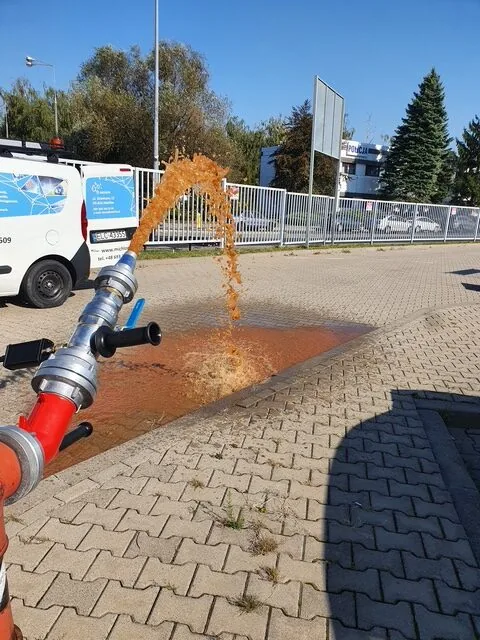
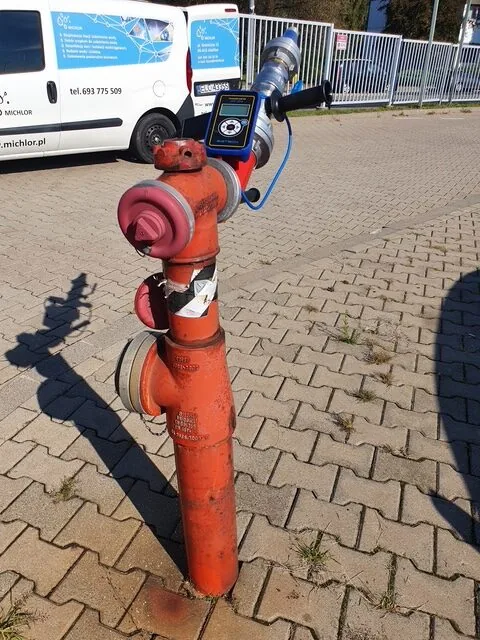
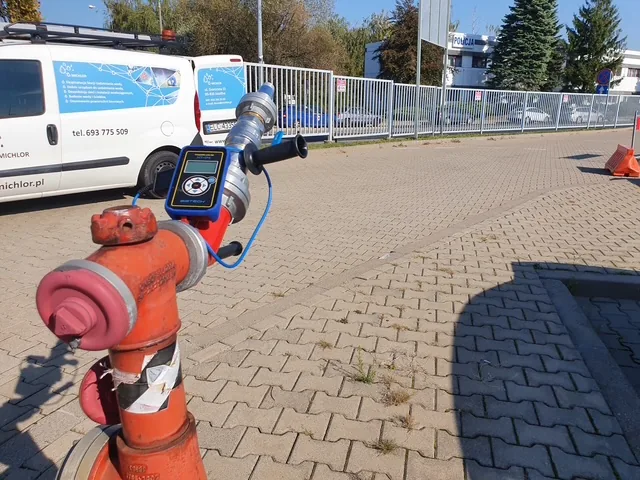
Mandatory inspection and flow testing of internal and external hydrants. BIATECH HT-04 equipment. A report compliant with the PN-EN 671 standard and State Fire Service guidance — required by insurers and supervisory authorities.
State Fire Servicea report recognised by the fire service
HT-04BIATECH testing equipment
Scope of the service
What the inspection covers hydrants?
The inspection is carried out in line with the PN-EN 671 standard and the Regulation of the Minister of the Interior and Administration of 7 June 2010 on fire protection in buildings. The confirming document is required by building insurers and by the State Fire Service.
Visual inspection of hydrants, hoses and nozzles
Hose pressure tests (every 5 years) — with HT-04 equipment
Check that valves and nozzles work correctly
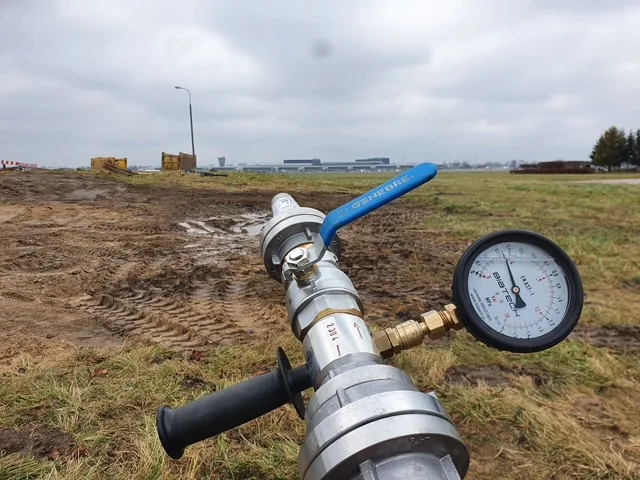
Flow and pressure measurement at the outlet
Inspection of hydrant cabinets and signage
Inspection report + photographic records
Entry in the building logbook
Remedial recommendations where required
Measurements
Hydrant flow and pressure measurements
A visual inspection alone is not enough. The regulations require flow and pressure to be measured at the outlet, because a hydrant that looks fine may not deliver the required amount of water. We take these measurements in Warsaw and Mazovia at every inspection and record the results in the report.
Internal hydrants (25, 33, 52)
Minimum flow rates under the Regulation of the Minister of the Interior and Administration of 7 June 2010: a type 25 hydrant 1.0 dm³/s, a type 33 hydrant 1.5 dm³/s and a type 52 hydrant 2.5 dm³/s. Pressure at the shut-off valve: from 0.2 to 1.2 MPa. We measure flow and pressure at the least favourably located hydrant.
External hydrants (DN80, DN100)
Requirements under the Regulation of the Minister of the Interior and Administration of 24 July 2009 on fire-fighting water supply: a DN80 hydrant must deliver at least 10 dm³/s at a minimum pressure of 0.2 MPa. We carry out a flow test with static and dynamic pressure measurement.
Measured result recorded in the report
The report contains the measured values for each hydrant, a comparison against the requirements of the standard, and recommendations where parameters fall below the threshold. This is the document the fire service accepts during an inspection and the insurer accepts when settling a claim.
Types
Which hydrants do we cover?
Internal
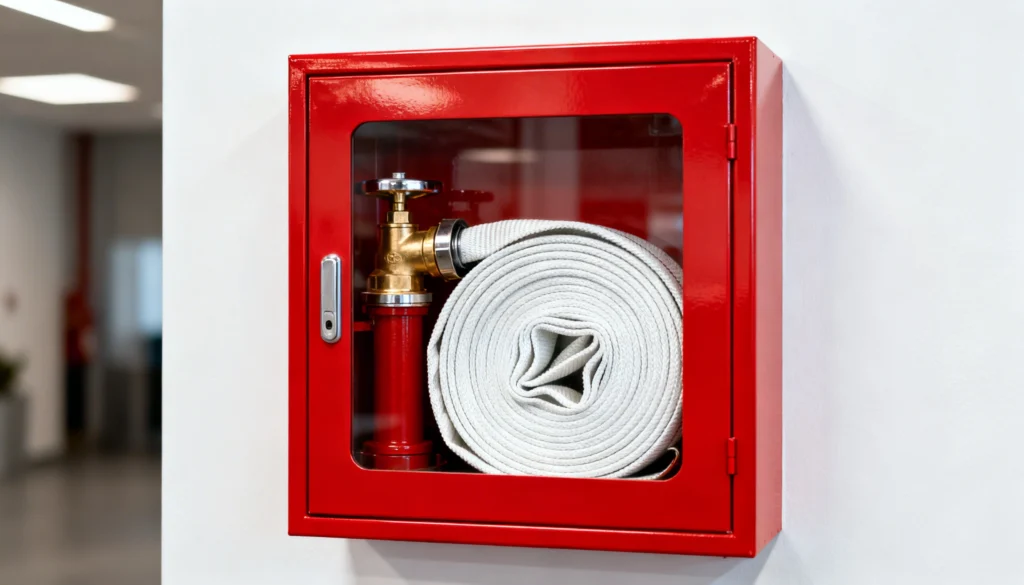
Internal hydrants
Type 25 and 52 hydrants in public buildings, office buildings, production halls and warehouses.
Standard: PN-EN 671-1 and 671-2
Inspection: every 12 months
Hose pressure test: every 5 years
Applies to: public buildings, warehouses, industrial halls
External
External hydrants
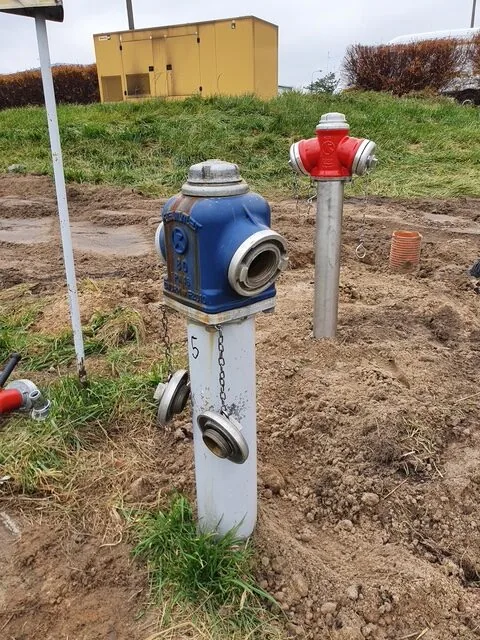
Above-ground and underground hydrants on industrial sites, housing estates, car parks and industrial land.
Standard: PN-EN 14339 / 14384
Inspection: every 12 months
Flow test (capacity)
Certificate for site managers
Monitoring
Schedule and documentation
We run regular inspections with reminders and archived reports. We work with housing associations, property managers and companies.
Electronic archive of reports
A reminder before the inspection falls due
Summary report for the property manager
Support across multiple locations
Customers
Who needs inspections?
The obligation stems from the Fire Protection Act and applies to every property fitted with hydrants.
Office buildings and shopping centres
Hotels and accommodation
Production halls and warehouses
Schools, hospitals and public offices
Housing associations
Industrial parks and plants
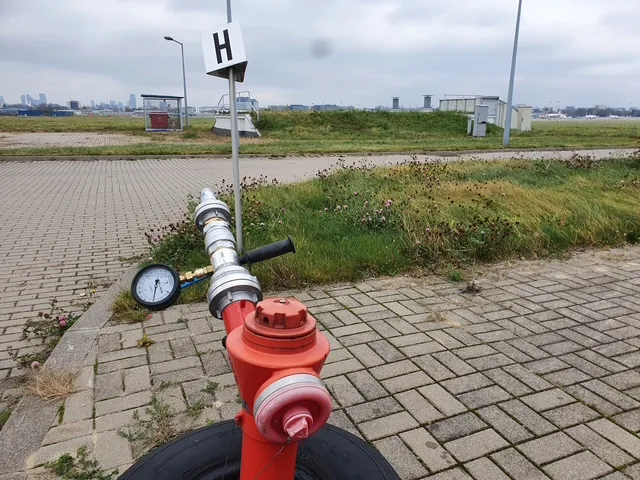
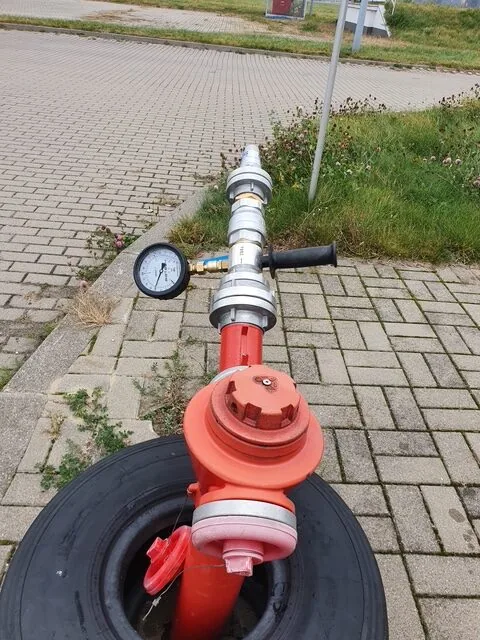
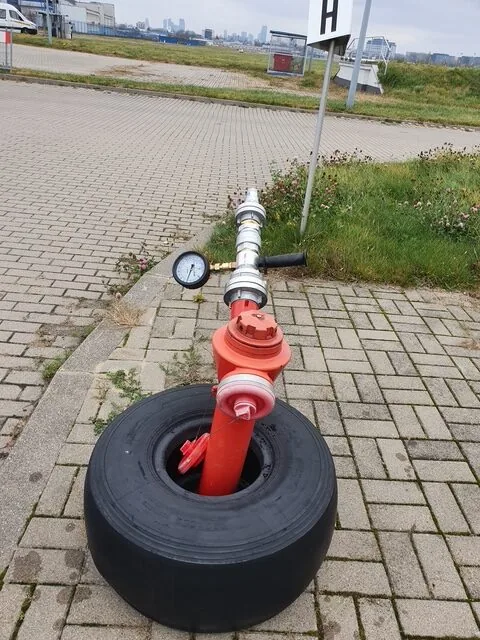
BIATECH HT-04 equipment
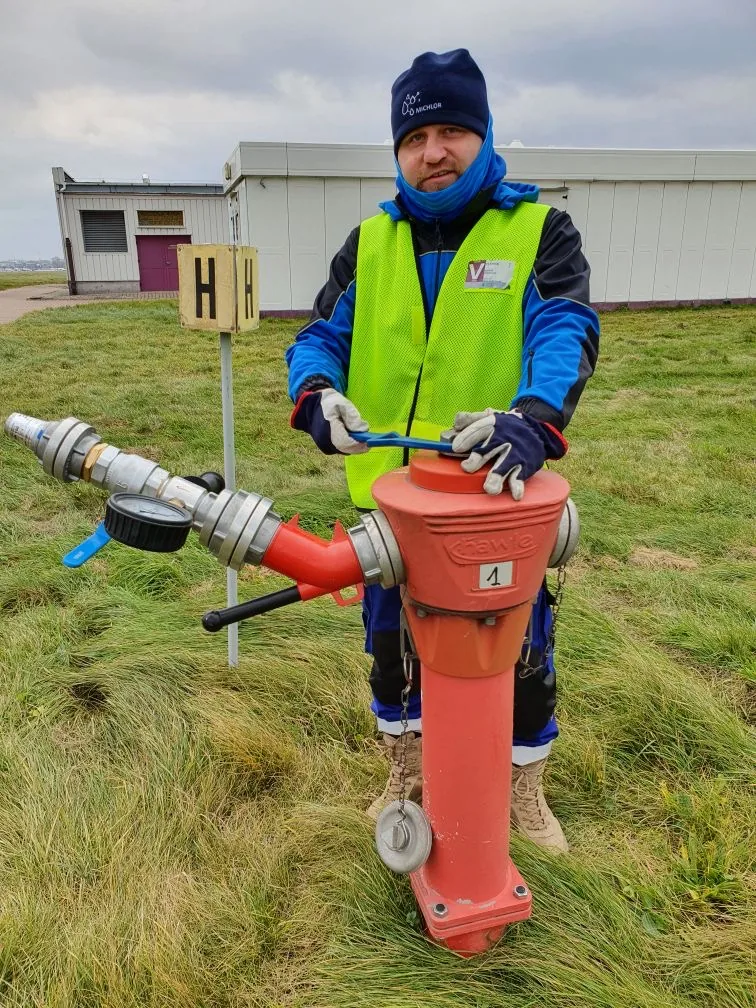
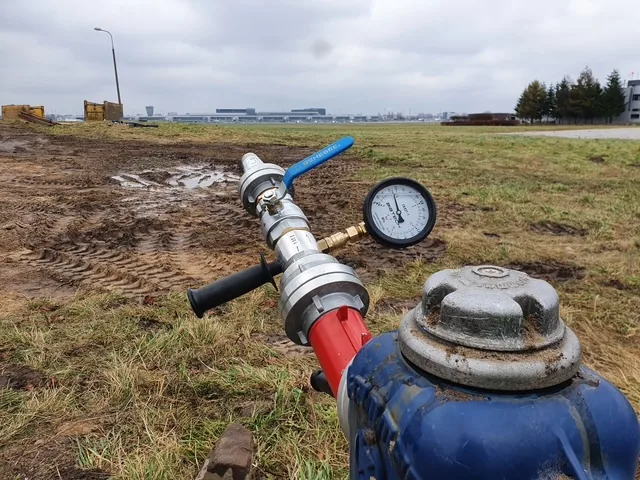
For pressure testing hydrant hoses we use professional BIATECH HT-04 equipment — the only equipment in Poland certified for pressure testing fire hoses in line with PN-EN 671.
Project gallery
Warsaw and Mazovia
Hydrant inspection in Warsaw and the surrounding area
We carry out inspections and flow measurements of internal and external hydrants across Warsaw and Mazovia, with a report compliant with fire safety regulations. Our hydrant inspections have included Chopin Airport, where the sanitary and technical requirements are among the most demanding in the country. We apply that same level of precision in every building.
Where we carry out inspections
Warsaw (all districts) and the surrounding area: Józefów, Otwock, Legionowo, Sulejówek, Marki, Ząbki, Wołomin, Pruszków and Piaseczno. We also cover the wider Mazovia region and the Łódź, Podlasie and Lublin provinces.
Who is required to do it
A hydrant inspection is an annual obligation for building owners and managers under fire safety regulations. We work with housing associations and co-operatives, companies, office buildings, industrial halls, hotels and public buildings. We issue the report required at an inspection.
Hose testing with BIATECH HT-04 equipment, including labelling and an entry in the report.
Indicative prices for Warsaw and the surrounding area. We will prepare an exact quote for your property free of charge once you tell us the number of hydrants, usually the same working day.
Internal and external hydrants must be inspected at least once a year. In addition, the hoses of internal hydrants undergo a pressure test every 5 years. An inspection is also required after every use of a hydrant.
What is the legal basis for hydrant inspections?
The obligation stems from the Fire Protection Act and from the Regulation of the Minister of the Interior and Administration of 7 June 2010 on fire protection in buildings. Inspections are carried out in line with the PN-EN 671-3 standard, and external hydrants additionally under the Regulation of the Minister of the Interior and Administration of 24 July 2009 on fire-fighting water supply.
How much does a hydrant inspection cost in Warsaw?
We charge per unit: roughly from PLN 60 net for an internal hydrant, from PLN 90 net for an external one and from PLN 50 net for a hose pressure test. With more hydrants at a single property the unit rate falls. Quotes are free of charge.
What happens if the hydrant inspection is out of date?
During an inspection the State Fire Service can impose a fine and order that shortcomings be put right, and after a fire an insurer may refuse to pay out or reduce the settlement if the hydrants did not have a valid inspection. Responsibility rests with the owner or manager of the building.
What do I receive after the inspection?
An inspection report with the measured flow and pressure for every hydrant, photographic records, an entry in the building logbook and remedial recommendations if anything needs putting right. The document is recognised by the State Fire Service and by insurers.
How long does a hydrant inspection take in a building?
In a typical office or residential building the inspection takes from a few hours to one working day, depending on the number of hydrants. We arrange a time that does not disrupt the running of the building, and where we work with you regularly we remind you about the next inspection before it falls due.
Free quote
Book a hydrant inspection
Tell us how many hydrants you have and we will prepare a quote and propose a date. We call back within 2 working hours. No obligation.
A report compliant with PN-EN 671, recognised by the State Fire Service and insurers
Flow measurements and hose pressure tests with BIATECH HT-04 equipment
On the market since 2009, with references including Chopin Airport
Entry in the building logbook and an archive of reports
We remind you before the next inspection falls due

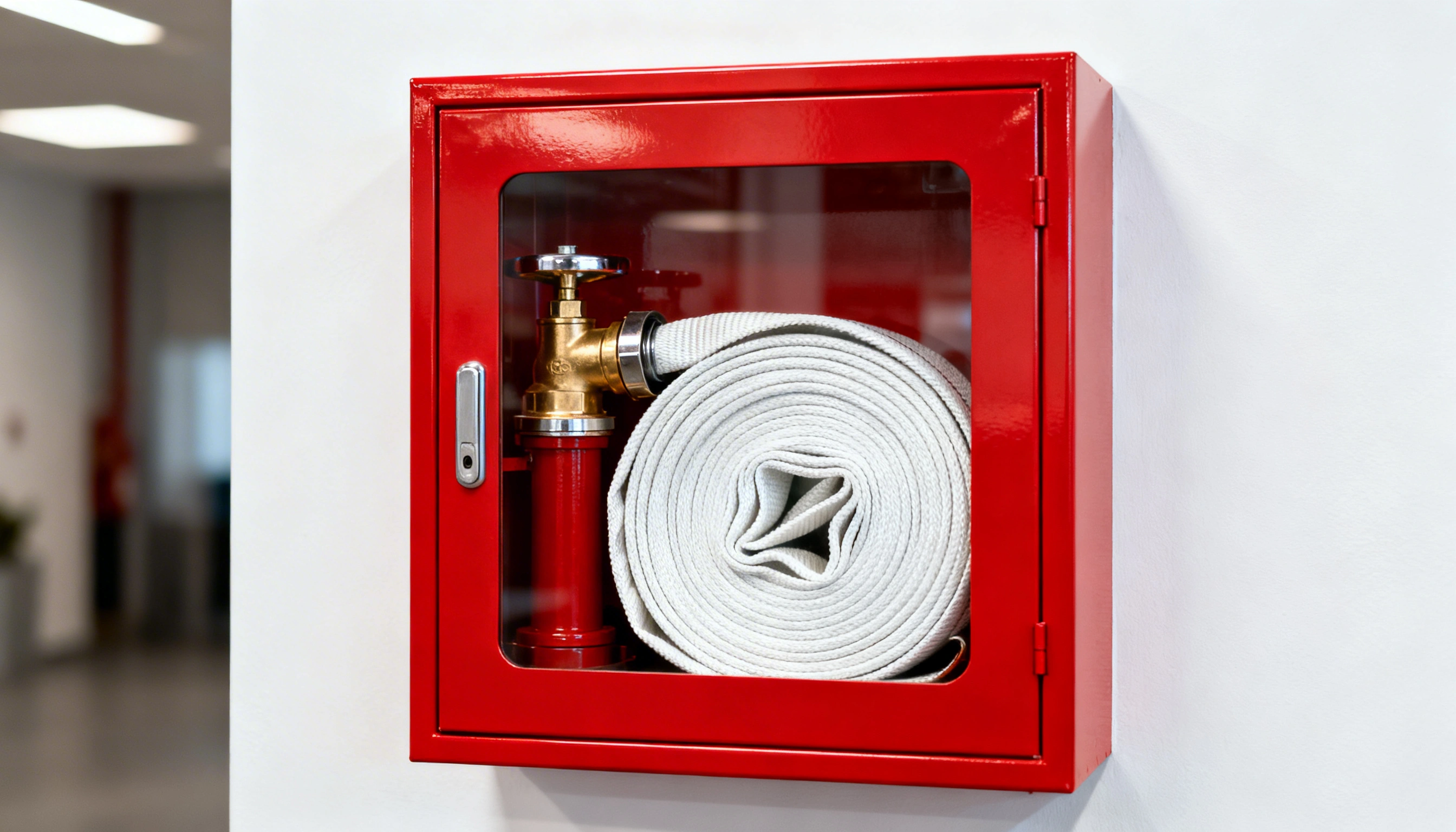 Internal