Professional disinfection of water systems using thermal, UV-C and chemical methods (NaOCl, ClO₂). We eliminate Legionella, E. coli and biofilm. Full documentation recognised by Sanepid and the sanitary inspectorate.
We match the disinfection method to the type of installation, the type of contamination and the legal requirements. Every job ends with a report and a follow-up test.
Urgent risk
Legionella control
Disinfection of hot and cold domestic water systems using the thermal method (≥75°C) or chlorine dioxide (ClO₂). Mandatory for hotels, hospitals and industrial plants.
Thermal method ≥75°C or ClO₂
Reports for hotels, hospitals and industrial plants
Legionella pneumophila testing
Documentation for Sanepid / the sanitary inspectorate
UV-C lamps (254 nm) destroy the DNA of bacteria, viruses and protozoa without any chemicals. No effect on the taste or odour of the water. Ideal for homes, restaurants and the food industry.
Classic shock disinfection with sodium hypochlorite (NaOCl) or chlorine dioxide (ClO₂). Required after flooding, E. coli contamination, well refurbishment and before a new intake is commissioned.
Shock concentration 100–200 mg Cl₂/l
ClO₂ destroys biofilm inside pipework
Mandatory after flooding or E. coli
Report ready for Sanepid / the sanitary inspectorate
Flushing and disinfection of internal water networks in line with PN-EN 806-4. Mandatory at the handover of new buildings, after refurbishment and after pipe replacement.
Ignoring microbiological contamination can lead to serious health and legal consequences. MICHLOR responds quickly — often within 24 hours of your call.
E. coli or coliform bacteria detected in a water test
Suspected Legionella in the hot water system
After flooding, water ingress or a mains failure
Before a new building is handed over for use
After pipework refurbishment or replacement of pipe sections
A long shutdown of the system (seasonal premises)
A requirement from building control or Sanepid
How we work
How the disinfection service works
01
Enquiry and diagnosis
Call or write — describe the problem or the type of installation. We will select a disinfection method and quote for the work on the day you contact us.
02
Site visit
The technician assesses the condition of the system, measures its volume and sets the concentration of the disinfectant. In urgent cases we carry out the work the same day.
03
Disinfection and flushing
We carry out disinfection using the chosen method (UV, chlorination, thermal). Afterwards we flush the system thoroughly until it meets the required standards.
04
Testing and report
We take a sample to the GBA Polska laboratory. Microbiological results usually take 3–4 working days, Legionella about 10 days. You receive a disinfection report with the results: ready for Sanepid and building control.
Standards and documents
Water system disinfection: standards and report
Disinfection of a water system is required after construction or refurbishment (before the system is put into use), after failures and work on the network, after microbiological limits are exceeded (coliform bacteria, E. coli, Legionella) and after a longer shutdown of the building. In each of these cases what matters is not only the treatment itself, but also the documents left behind afterwards.
Legal basis and standards
The PN-EN 806-4 standard sets out the requirements for flushing and disinfecting new installations before they are handed over for use. Water quality after disinfection must comply with the regulation of the Polish Minister of Health of 7 December 2017 on the quality of water intended for human consumption.
How pipework disinfection works
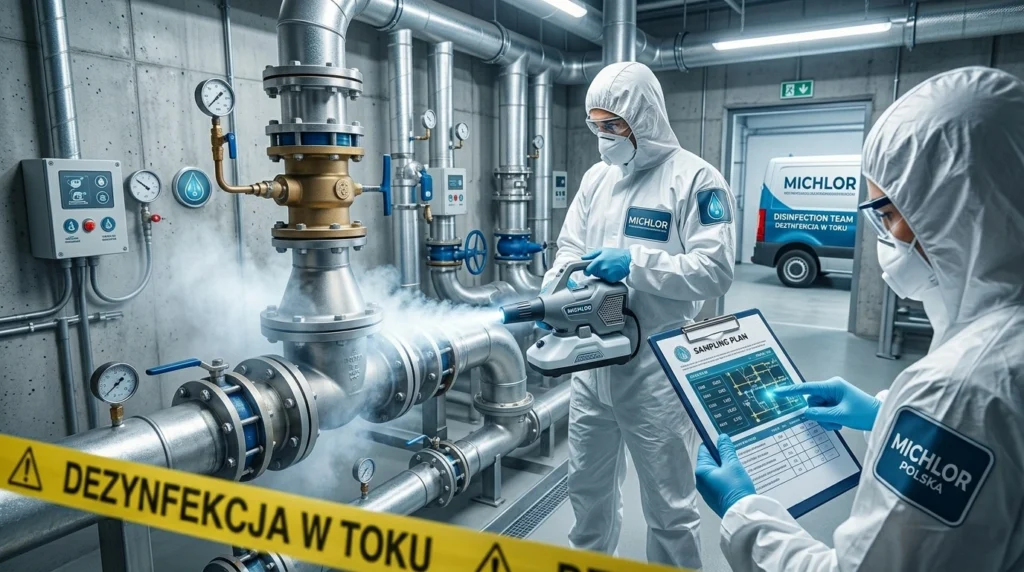
Initial flushing removes deposits and biofilm, then we match the method to the installation and the type of contamination: chlorination (NaOCl), chlorine dioxide or thermal disinfection. The agent has to work at the required concentration for a set contact time, and finally the system is flushed until it meets drinking water parameters.
Report and follow-up test
After disinfection we collect samples for the accredited laboratory. You receive a report on the treatment together with the follow-up test results, recognised by Sanepid and the sanitary inspectorate at handovers, inspections and in reports following contamination.
The most commonly chosen method is chlorination of a water system. We always confirm that the treatment worked water testing at an accredited laboratory. In closed systems — boiler rooms, heat substations and cooling circuits — we supplement disinfection with chemical water conditioning, which keeps the parameters stable and protects the system against corrosion and scale.
Warsaw and Mazovia
Water disinfection in Warsaw and the surrounding area
We disinfect water and water systems across Warsaw and the whole of Mazovia: wells, hot and cold water systems, mains networks and commercial premises. We match the method to the problem (UV, chlorination or thermal disinfection), work with our own team and issue documentation recognised by Sanepid and the sanitary inspectorate.
Where we disinfect
Warsaw (all districts) and the surrounding area: Józefów, Otwock, Legionowo, Sulejówek, Marki, Ząbki, Wołomin, Pruszków and Piaseczno. We also cover the wider Mazovia region and the Łódź, Podlasie and Lublin provinces.
The most common reasons for disinfection
Poor well water quality, bacteriological contamination, the risk of Legionella, the handover of a new installation or an order from Sanepid following a test. Not sure whether you need disinfection? Start with water testing, which is where we start every job.